The practice of Zazen is at the heart of Zen Buddhism. It was through this practice that, some 2 600 years ago,
Siddhartha Gautama, guided by his existential quest, awakened to the reality of existence and the interconnectedness of all things,
hence the name given to him: Buddha in Sanskrit, meaning AwakenedOne. He then spent his life passing on the understanding of his awakening. Thus, from generation to generation, from patriarch to patriarch,
the practice of zazen has been passed down to us, unbroken.
Zazen refers to the sitting posture of the body, and to the state of being seated.
The mental attitude specific to this practice is called Shikantaza: just sitting — the famous letting-go we often hear about.
Zazen requires no mental support, or visualization , nor does it seek to achieve a special state.
Shikantaza is a central notion of the Sôtô School of Zen, founded by the monk Eihei Dôgen.
It was in 1223, during a long journey to the sources of Zen in China, and with the man who became his master,
that Master Dôgen experienced Shikantaza. This profound realization formed the basis of his teaching on his return to Japan.
Of course, in our lives, the mental organ is a precious tool. It helps us analyze, plan and communicate.
However, when it becomes the only way we perceive the world, it traps us in an unending flow of thoughts.
This overactivity can lead to the illusion that we are our thoughts and by identifying ourselves with our mind,
we create a separation between ourselves and the rest of the world. We lose touch with the intimate dimension of life,
the one that unites us with each other. This leads to all kinds of suffering, both for ourselves and for others.
And so we spend our lives looking outside ourselves for ways to fill the void we create.
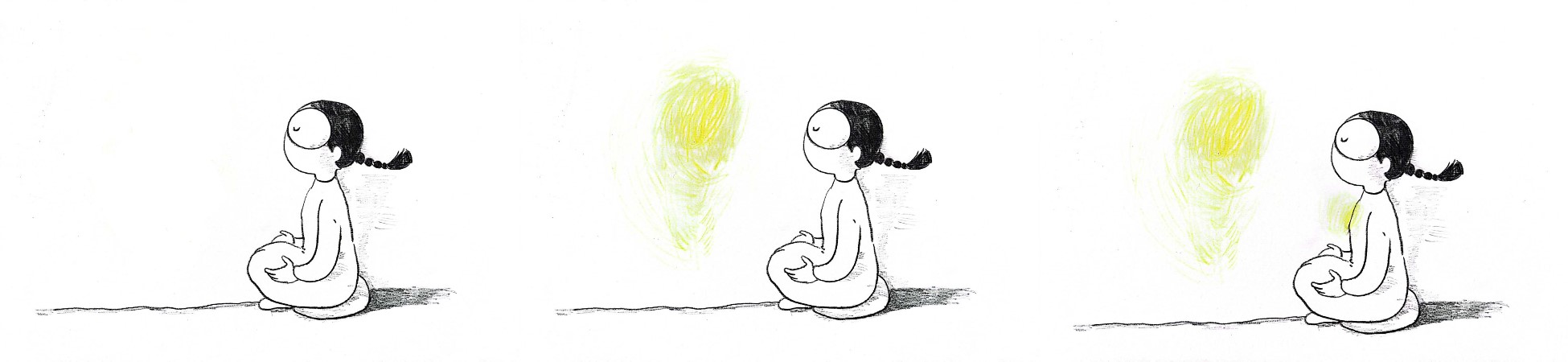
In the sitting posture of zazen, the body is motionless, tension-free, the breath is free to come and go.
We let thoughts come and go without interfering, without following them or trying to push them away.
Master Dôgen speaks of being resolutelyseated. An immobile and vigilant presence.
One of the natural repercussions of zazen practice is that we naturally reconnect with the intimate dimension of life,
which lies at the heart of our human experience, where intimate understanding comes not from reasoning,
but from a direct, non-conceptualized experience of life.
We are then reminded that, beyond the distinctions we make, our lives are deeply interconnected.
So, even if it’s only for a brief moment during each zazen, little by little in our daily lives, we cultivate a more authentic presence,
in our relationship with ourselves, as well as in our interactions with others.
A subtle but powerful process of reconnection with life as it is.