there are different forms of chanting that convey the teachings of Shakyamuni Buddha and the masters of this tradition.
There are the sutras, Buddhist texts recited or chanted during ceremonies.
There is also shômyô, a traditional form of Japanese Buddhist chanting
in which several notes may be sung on a single syllable.
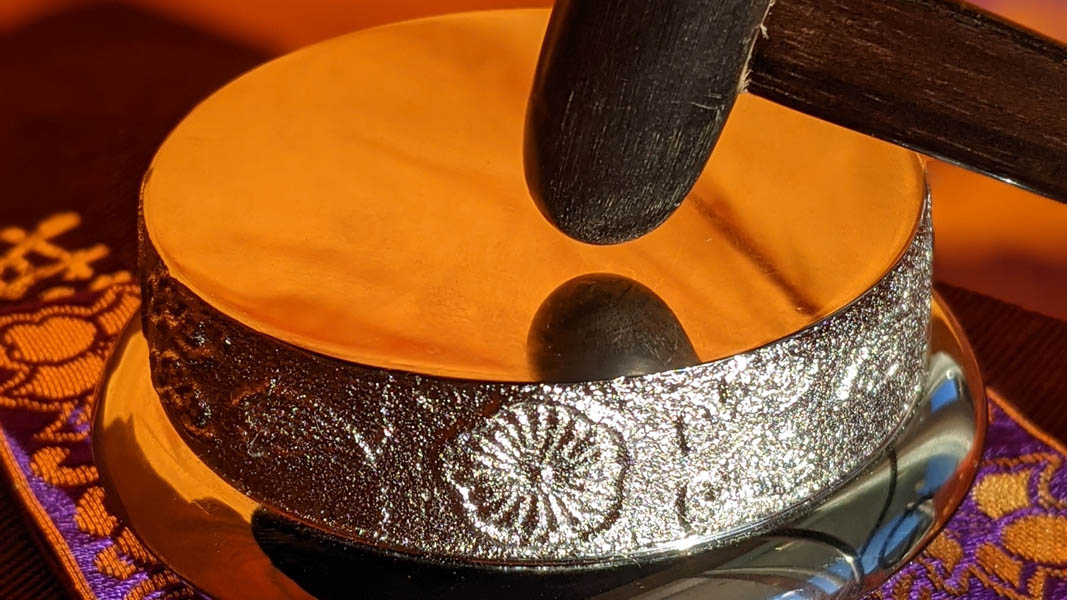
And then there is Baika-ryû Eisanka: Buddhist poems and hymns sung to the accompaniment of small bells.
Baika 梅花 – plum blossom
Ryu 流 – school, tradition
Eisanka 詠賛歌 -sung hymn of praise
The plum blossom is a traditional Japanese symbol.
Blooming while winter is not yet quite over, it evokes strength and renewal.
It also holds a special place in Master Dôgen’s teachings. The plum blossom is closely connected to the transmission of the Dharma he received from his master in China. It thus became an expression of the Buddha’s teaching and its transmission.
In 1952, the Sôtô Zen School established Baika-ryû Eisanka to commemorate
the 700th anniversary of Master Dôgen’s death. In postwar Japan,
this new form of practice through chanting was also part of a movement
intended to bring hope and courage to a population deeply affected by the war.
The texts and melodies were developed, along with a distinctive way of chanting and accompanying the songs.
The name Baika-ryû was chosen in reference to the plum blossom and its connection with the founders of the Sôtô tradition. The chant are deeply rooted in the teaching of Shakyamuni Buddha, Dôgen Zenji, and Keizan Zenji.
Although Baika is sung in Japanese, the ritual that accompanies the chanting, the gesture, the sound of the bells, and the melodies can create, for the duration of a gathering, a space of warmth, respect, and joy.
Thanks to the available translations, the ancient words we whant, carried by the gentleness of the melodies,
gradually allows us to enter more deeply into these teachings.
The Three Vows of Baika-ryû
We live according to the Buddha’s teachings through Baika-ryû Eisanka.
We live in harmony with others through Baika-ryû Eisanka.
We create a joyful world around us through Baika-ryû Eisanka.